
-
 Bhumi International
What Makes a Quality Tile? Exploring Manufacturing, Strength and Finishes
Introduction
Tiles are an essential element of modern architecture, combining functional performance with visual appeal. However, selecting quality tiles involves more than choosing an attractive colour or pattern. Their construction, manufacturing process, dimensions, thickness and surface characteristics all contribute to their suitability for different applications. Understanding these factors helps buyers, architects, builders and designers evaluate products more effectively and make informed decisions for residential and commercial projects.
1. Understanding Tile Composition and Manufacturing
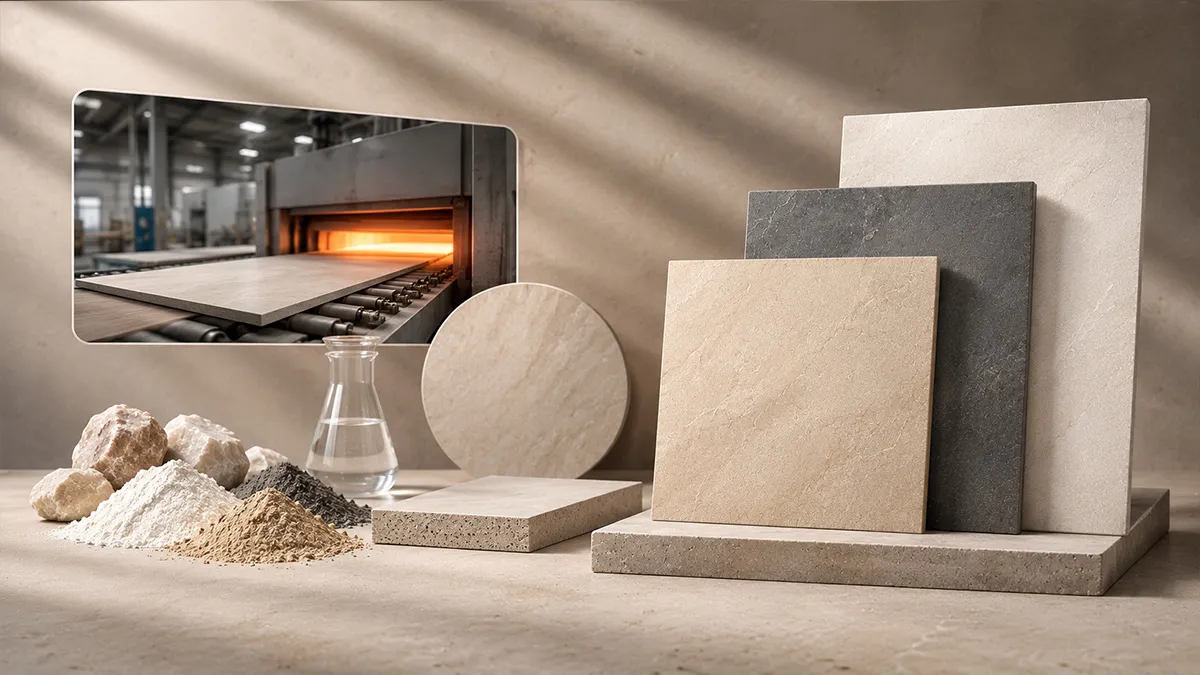
The quality of a tile begins with its manufacturing process and raw material composition. Ceramic and porcelain tiles are developed using carefully prepared raw materials that undergo shaping, drying, surface treatment and high-temperature firing. Each manufacturing stage contributes to the final product's characteristics, including appearance, strength and dimensional consistency. Different tile categories are developed to meet different application and design requirements. Consistency in manufacturing processes and attention to product specifications are important considerations when evaluating a tile manufacturer. Understanding how tiles are produced also helps buyers appreciate the differences between available collections and product types.
2. Why Tile Strength and Durability Matter
Strength and durability are important factors when selecting tiles for frequently used spaces. Floors in residential properties, commercial buildings and public environments may experience different levels of movement, weight and everyday wear. The suitability of a tile depends on its intended application and relevant technical characteristics. Buyers should consider product specifications and available test information rather than relying on appearance alone. Technical parameters such as breaking strength, abrasion resistance, water absorption and chemical resistance can help assess product suitability. The importance of each parameter varies depending on the installation environment, making application-specific selection essential.
3. The Importance of Tile Sizes and Thickness
Tile size and thickness influence both installation planning and the final architectural appearance. Larger tiles can create a seamless visual effect by reducing the number of grout joints, making them suitable for many contemporary design concepts. Smaller tiles provide flexibility for decorative layouts, compact spaces and detailed applications. Thickness is another important specification that should be considered according to the intended use of the product. Different collections may offer different thickness options depending on their design and application requirements. Architects, contractors and buyers should review available product dimensions and technical details before finalising their selection.
4. Surface Finishes and Their Functional Characteristics
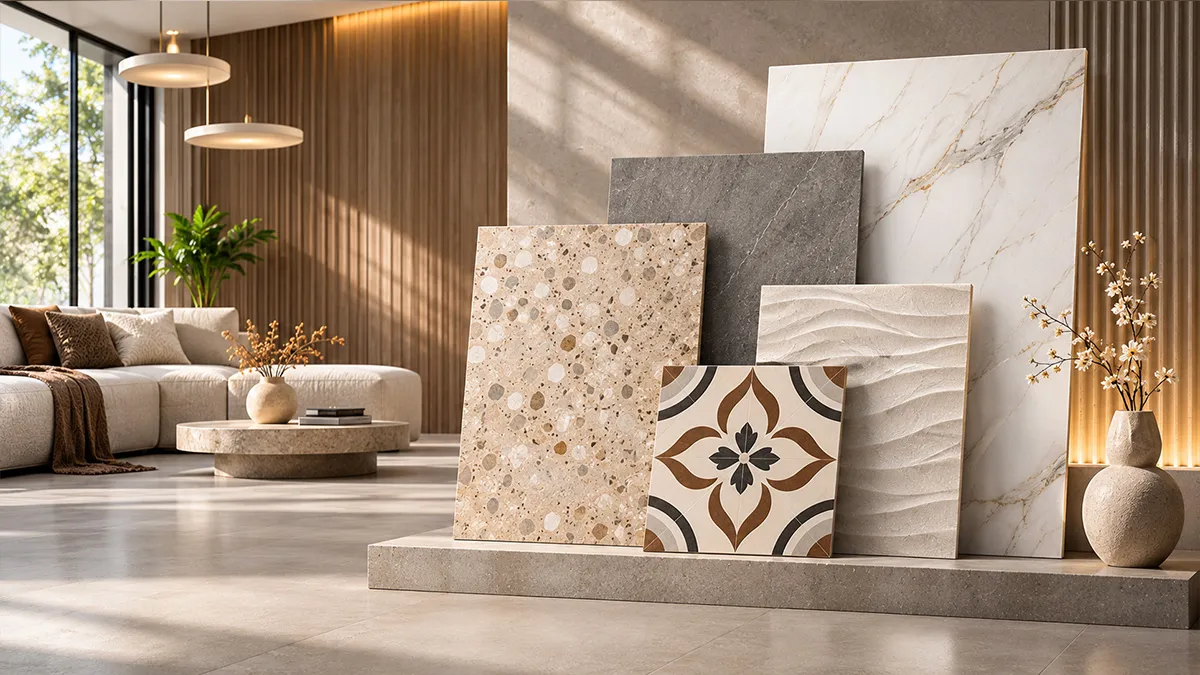
Surface finishing plays an important role in defining the appearance and characteristics of a tile. Polished finishes offer a smooth, reflective appearance that can enhance the brightness and elegance of interiors. Matte finishes provide a more subtle visual effect, while textured finishes introduce depth and a distinctive tactile character. Digital printing technology allows manufacturers to develop detailed patterns, stone-inspired visuals and decorative designs. Surface selection should always consider the intended application, maintenance requirements, lighting and desired appearance. For spaces where slip resistance is important, buyers should review the relevant product test results and suitability rather than assuming performance based on texture alone.
5. Quality Inspection and Product Consistency
Quality inspection helps manufacturers evaluate whether products meet their intended specifications and quality expectations. Important inspection considerations can include dimensional accuracy, surface appearance, colour consistency and visible defects. Technical testing may also assess properties such as water absorption, breaking strength, abrasion resistance and resistance to chemical exposure. These evaluations provide useful information about product characteristics and application suitability. Bhumi International's questionnaire confirms an association with a third-party quality control company. The specific inspection procedures and testing standards should be verified for each product before making technical claims. Transparent product information helps buyers make better purchasing decisions and supports confidence in international supply relationships.
Conclusion
A quality tile is defined by more than its design. Manufacturing consistency, technical characteristics, dimensions, thickness and surface finishing all contribute to product suitability. Understanding these factors allows buyers and professionals to select tiles according to their project requirements. Bhumi International brings together tile manufacturing and export expertise from Morbi, India, offering eight distinctive collections for diverse architectural applications.